




No. Cataracts cannot be completely cured with medication. Eye drops may help slow progression in the early stage, but the only definitive treatment is cataract surgery to remove the cloudy lens.
EYEPLUS EYE CLINIC PRESBYOPIA
EYEPLUS EYE CLINIC PRESBYOPIA
EYEPLUS EYE CLINIC PRESBYOPIA
EYEPLUS EYE CLINIC PRESBYOPIA
EYEPLUS EYE CLINIC PRESBYOPIA
Comprehensive Guide to Cataracts
Symptoms, Causes, and Treatment in Korea

Cataracts are one of the most common age-related eye conditions, gradually affecting vision as the natural
lens of the eye becomes cloudy over time. Many people first notice subtle changes such as blurry
vision,
increased glare, or difficulty seeing clearly at night—symptoms that often progress if
left untreated.
Understanding the symptoms of cataracts and what causes cataracts is the first step toward
protecting
your vision. While cataracts are a natural part of aging, modern ophthalmology offers highly
effective solutions,
including advanced cataract surgery that can restore clear vision and improve
overall quality of life.
At EYE Plus Eye Clinic in Seoul, we provide personalized cataract care designed for both local and
international patients.
From detailed eye examinations to customized surgical planning, our approach
focuses on safety, precision,
and long-term visual outcomes—helping you regain clear, comfortable vision
with confidence.
What are the Common Symptoms of Cataracts?
Cataracts develop gradually and often start with mild vision changes. The most common symptoms of
cataracts include cloudy vision, where objects appear blurry or hazy, even with glasses.
You may also notice increased light sensitivity, halos around lights, and difficulty seeing
clearly at night. Some patients experience monocular double vision in one eye or colors appearing
dull and less vivid.
If these symptoms persist or worsen, an eye examination is important to check for cataracts and
determine the right treatment.
What Is a Cataract?
Inside the eye, there is a natural lens that focuses light precisely.
This lens should be clear and transparent, like a camera lens, to provide sharp vision.
However, due to aging, injury, or inflammation, the lens can gradually become cloudy.
When this happens, vision becomes blurred—similar to looking through a foggy or dusty camera lens.
This condition is called a cataract.
Normal Eye
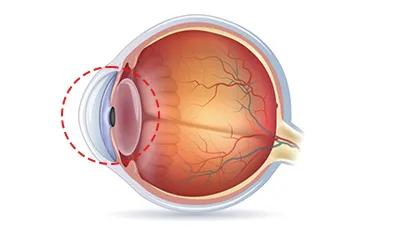
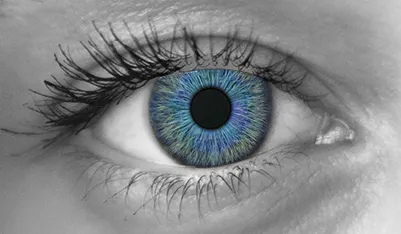
Clear and transparent natural lens
Cataract
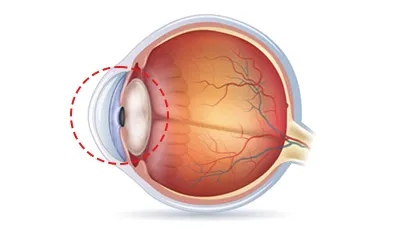
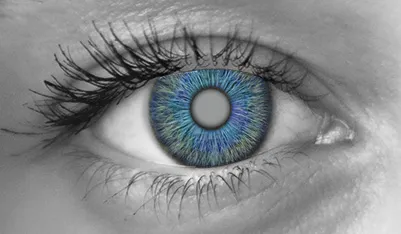
Clouded and opaque natural lens
As cataracts progress, vision may appear blurry overall, and clarity decreases even in bright
environments.
It may feel like looking through a fogged window, and vision does not improve even after changing
glasses.
Ultimately, cataracts are not just a simple decrease in vision, but a structural change in the eye,
which is why accurate diagnosis and proper management are important.
Key Risk Factors for Cataracts
Several factors can increase the risk of developing cataracts by damaging the proteins in the eye’s natural lens, causing it to become cloudy over time.
-
he most common cause. As we age, lens proteins naturally break down and lose transparency.
-
High blood sugar can accelerate changes in the lens, increasing the risk of cataracts and affecting overall eyesight.
-
Long-term exposure to UV rays can damage lens proteins and contribute to earlier cataract formation.
-
Oxidative stress from smoking speeds up protein damage inside the lens.
-
Long-term use of steroid medications can alter the structure of the lens and increase cataract risk.
These key risk factors contribute to the gradual breakdown and clumping of lens proteins, leading to blurred or cloudy vision over time.
Cataract Self-Diagnosis
Cataracts often develop slowly, making them easy to overlook in the early stages. Many people mistake the symptoms for simple aging or eye fatigue. If you notice several of the following signs in your daily life, a detailed eye examination is recommended.
-
Even with new glasses, vision remains unclear and appears hazy overall.
-
You may suddenly find it easier to read close objects without glasses, but overall vision quality becomes unstable. This can occur as the lens changes shape and refractive power.
-
Eyes become more sensitive to bright light, causing discomfort outdoors, while vision may feel relatively better in dim environments.
-
Lights may appear scattered or overly bright, especially at night when driving.
-
Covering one eye still results in double or overlapping images.
Which one do you have?
Cataract vs. Presbyopia
Cataracts and presbyopia are both common aging eye conditions, but the causes
and symptoms are clearly different.
The key differences are:
Quick Comparison of Cataract vs. Presbyopia
| Category | Presbyopia | Cataract |
|---|---|---|
| Field of view example image |
|
|
| Vision Example | Near objects are blurry, distance is relatively clear |
Both near and distance vision appear blurry and hazy |
| Main Cause | Reduced flexibility of the lens (aging) | Clouding of the lens blocking light |
| Onset | Starts gradually in your 40s | Common after 50–60s (but can occur earlier) |
| Difficult Distance | Difficulty focusing on near objects | Blurred vision at all distances |
| Visual Experience | Difficulty focusing, delayed clarity | Foggy, cloudy vision like looking through mist |
| With Reading Glasses | Near vision improves | Vision remains blurry even with glasses |
| Light Sensitivity / Halos |
Usually mild | Noticeable glare and halos, especially at night |
| Progression | Relatively stable progression | Gradually worsens over time |
| Double Vision | Rare | Possible even in one eye (monocular double vision) |
| Treatment | Reading glasses or laser correction | Cataract surgery (lens replacement) |
Types of Cataracts
Cataracts can develop for different reasons and may vary depending on the underlying cause and progression. Understanding the types of cataracts helps determine the most appropriate treatment approach.
-
Senile Cataract (Age-Related Cataract)
This is the most common type, caused by the natural aging process. As the lens gradually loses transparency over time, vision becomes cloudy. While cataracts often begin after the age of 50, not everyone experiences significant vision loss at the same rate. -
Traumatic Cataract
This type occurs when the lens is damaged due to external injury or impact. In many cases, other parts of the eye such as the retina may also be affected, which can limit visual recovery even after cataract surgery. -
Complicated Cataract (Cataracta Complicata)
Complicated cataracts develop as a result of other eye or systemic conditions, such as diabetes, glaucoma, uveitis, or vitreous disorders. Even if surgery is successful, visual outcomes may depend on the underlying disease, and the risk of complications can be higher. -
Posterior Subcapsular Cataract
This type often develops after cataract surgery or due to changes in the lens capsule. It causes clouding at the back of the lens and can usually be treated effectively with a simple laser procedure, restoring vision. -
Congenital Cataract
Congenital cataracts are present at birth or develop during early childhood. In many cases, the exact cause is unknown. Early detection and timely treatment are important, as severe cases can affect visual development.
Advanced Cataract Diagnosis at EYE Plus Clinic
Accurate diagnosis is essential for safe and successful cataract surgery. At EYE
Plus
Clinic, a university-level diagnostic system is used to precisely analyze each patient’s eye
condition
and design a customized surgical plan.
We utilize advanced equipment such as the IOL Master 700 and AL-SCAN to perform
detailed
measurements of the eye, ensuring high accuracy and predictable outcomes.
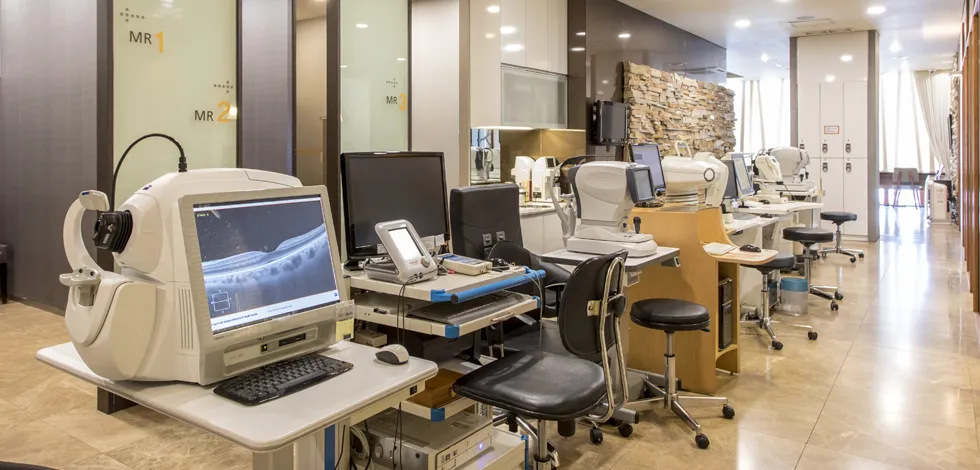
Precise Biometric Measurement with IOL Master 700
The IOL Master 700 uses swept-source OCT technology to measure the eye’s length, corneal curvature, and anterior chamber depth with exceptional precision. These measurements are critical for selecting the correct intraocular lens (IOL) power, directly affecting post-surgery vision quality.
Comprehensive Analysis with AL-SCAN
The AL-SCAN provides fast and accurate biometric data, including axial length and corneal parameters. By combining multiple data points, it helps improve the reliability of surgical planning and reduces the risk of refractive errors after surgery.
Customized Surgical Planning Through Precision Diagnostics
All diagnostic results are carefully analyzed to determine the most suitable surgical method and intraocular lens for each patient. This **precision diagnostics** approach allows for safer procedures, better visual outcomes, and long-term stability after cataract surgery.
Does Insurance Cover Cataract Surgery in Korea?
Cataract surgery in Korea is generally covered under the National Health Insurance Service (NHIS
Korea), depending on the patient’s eligibility and the medical necessity of the procedure.
If
the cataract significantly affects vision and daily life, a portion of the surgery cost may be
reimbursed through bnational health insurance Korea for foreigners who are enrolled in NHIS.
However, coverage may vary depending on the type of intraocular lens (IOL) used. Standard monofocal
lenses are typically covered, while premium lenses (such as multifocal or toric IOLs) may require
additional out-of-pocket payment.
For those with private insurance (medical reimbursement / “Silson”), it is important that the
procedure is clearly documented as a medical treatment rather than a cosmetic or elective procedure.
Insurance approval often depends on whether the cataract diagnosis and treatment purpose are
properly
stated in medical records.
Tailored treatment is necessary
depending on the timing.
depending on the timing.
How are cataracts treated?
Cataract treatment varies depending on the stage of progression. In the early stages, management focuses on slowing progression and monitoring vision changes. As the cataract advances and begins to significantly affect daily life, surgical treatment becomes the most effective solution. The key is choosing the right timing based on symptoms and precise eye examination results.
Early Stage: Drug Treatment and Regular Check-Ups
In the early stage, cataracts are often mild, and vision may not be severely affected. In this
phase,
drug treatment may be used to help slow progression while monitoring the condition.
Regular eye examinations every 3–6 months are recommended to track changes in vision and
cataract
progression. However, it is important to note that medication cannot completely remove cataracts and
should be considered a supportive management approach rather than a cure.
Advanced Stage: Surgical Treatment
As cataracts progress, the clouding of the lens begins to affect overall vision, and glasses or
medication are no longer sufficient. At this stage, laser cataract surgery or conventional
cataract surgery is required.
The procedure involves removing the clouded natural lens and replacing it with an artificial
intraocular
lens (IOL). At EYE Plus Eye Clinic, the timing of surgery is carefully determined based on detailed
examinations, ensuring that treatment is not rushed unnecessarily.
A personalized approach is taken by considering factors such as the severity of symptoms, lifestyle,
and
expected visual outcomes, providing the most appropriate treatment for each patient.
* A more accurate diagnosis can be found through a specialized examination. Please feel free to proceed with the consultation or appointment through the button below.
Presbyopia and Cataract surgery methods
The appropriate treatment for presbyopia and cataracts depends on the patient’s age, degree of
progression,
and lifestyle. Not all patients require the same approach, which is why a detailed
eye examination
is essential to determine the most suitable solution.
At EYE Plus Eye Clinic, treatment plans are customized based on years of clinical experience in both
presbyopia correction and
cataract surgery, ensuring safe and effective visual outcomes.
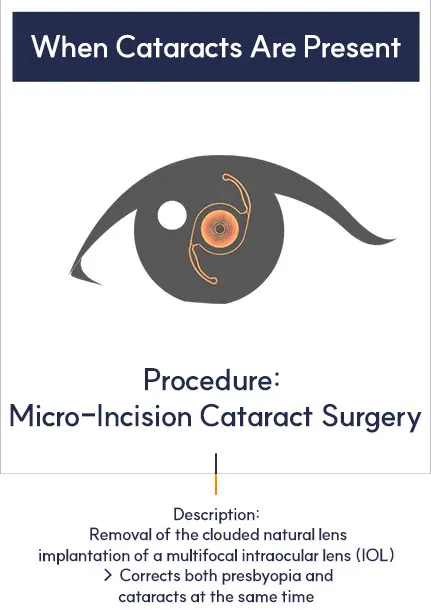
This procedure involves removing the clouded
natural
lens
and replacing it with an
artificial intraocular lens (IOL).
By implanting a multifocal or customized IOL,
both presbyopia and cataracts can be
corrected
at the same time.
Restores clear vision by removing the cloudy lens
Corrects both near and distance vision simultaneously
Provides a long-term solution for aging eyes
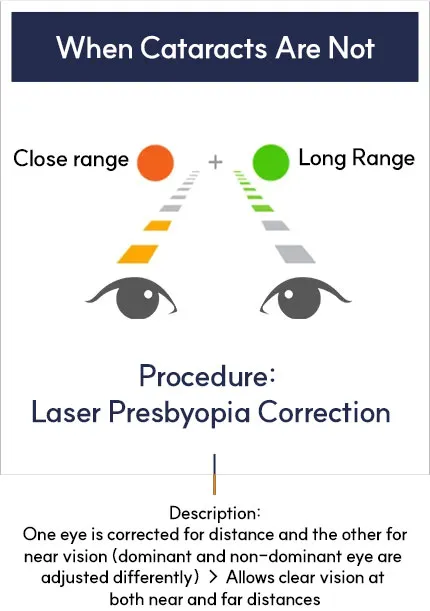
For patients without cataracts,
laser-based vision
correction can
improve both near and distance vision.
One eye is adjusted for
distance and the other for near
vision (monovision approach)
Allows clear vision at multiple
distances without relying heavily
on reading glasses
Customized based on visual needs and lifestyle
👉 Want to see real results after cataract and presbyopia surgery?
Check out patient stories and reviews from EYE Plus Eye Clinic and see the difference for yourself. Read patient stories and see the difference for yourself.
Check out patient stories and reviews from EYE Plus Eye Clinic and see the difference for yourself. Read patient stories and see the difference for yourself.
FAQ About Cataract
The timing depends on how much cataracts affect your daily life. Surgery is recommended when vision impairment begins to interfere with activities such as reading, driving, or work.
While cataracts cannot be fully prevented, you can reduce risk by protecting your eyes from UV exposure, managing conditions like diabetes, quitting smoking, and having regular eye examinations.
Most patients experience improved vision within a few days, but full recovery typically takes a few weeks. Your doctor will monitor healing through follow-up visits.
It depends on the type of intraocular lens (IOL) used. Some patients may still need glasses for certain distances, while premium lenses can reduce dependence on glasses.
Yes. Once the cloudy natural lens is removed and replaced with an artificial lens, cataracts do not return. However, some patients may develop posterior capsule opacity, which can be easily treated with a laser.
Yes, if you are enrolled in NHIS Korea, part of the cost may be covered when the surgery is considered medically necessary. Coverage may vary depending on the lens type.
Yes. EYE Plus Eye Clinic provides English medical reports and certificates to support international patients and insurance claims.
② Whether symptoms are temporary or progressively worsening