Many people rely on artificial tears when their eyes feel dry. While eye drops can provide temporary relief, the discomfort often returns shortly after.
Have you ever wondered,
“Why don’t my eyes improve even though I use artificial tears several times a day?”
The reason is simple: dry eye syndrome is not just caused by a lack of tears.
In many cases, the real problem is not the quantity of tears, but the quality and stability of the tear film.
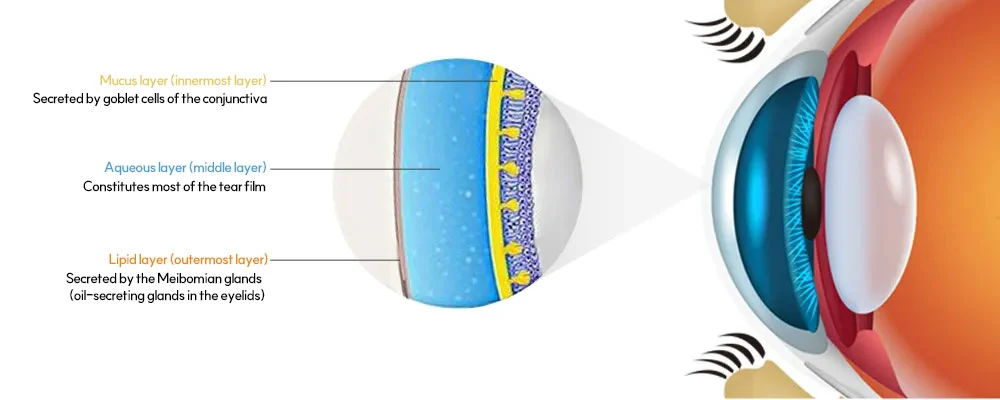
When the protective layers of the tear film do not function properly, moisture cannot stay on the eye surface.
As a result, even if you apply artificial tears, the moisture evaporates quickly, leading to repeated symptoms such as dryness, irritation, and a gritty sensation.
To effectively treat dry eye syndrome, it is essential to identify and address the underlying cause—not just temporarily add moisture.
The Real Cause of Dry Eye: Meibomian Gland Dysfunction (MGD)
Among these, the lipid (oil) layer plays a critical role in keeping tears from evaporating too quickly.
Along the edges of your eyelids are tiny glands called meibomian glands, which produce this protective oil layer.
When these glands function normally, they secrete a clear oil that forms a stable protective barrier over the tears.
However, due to factors such as aging, fine dust, prolonged screen use, or poor lifestyle habits, these glands can become blocked or dysfunctional.
When this happens:
The oil becomes thick or clogged
The tear film becomes unstable
Tears evaporate rapidly—sometimes within seconds
This condition is called meibomian gland dysfunction (MGD).
As a result:
Your eyes may feel dry even after using artificial tears
You may experience burning, irritation, or a foreign body sensation
Symptoms tend to repeat frequently
If your dry eye symptoms do not improve easily, it is important to look beyond tear quantity and focus on the structure and function of the tear film—especially the meibomian glands.
Dry Eye Self-Check
If you experience three or more of the following symptoms, you may have dry eye syndrome:
You often feel dryness or a tight sensation in your eyes
You feel like there is sand or a foreign object in your eyes
Your eyes become easily red or irritated
Eye fatigue worsens after using a smartphone or computer
Your eyes become more sensitive in windy or air-conditioned environments
Your eyes feel dry, but tear excessively at the same time
This self-check is for reference only.
If your symptoms persist or interfere with daily life, a detailed eye examination is recommended to identify the exact cause and receive appropriate treatment.
Daily Care Tips for Dry and Irritated Eyes
If your dry eye symptoms are mild or in the early stage, they can often be improved through consistent daily care without immediate clinical treatment.
However, if symptoms such as dryness, irritation, or a foreign body sensation continue to recur or worsen, the cause may not be simple dryness. In many cases, underlying conditions such as meibomian gland dysfunction (MGD) require professional treatment.
The following daily care habits can help improve tear stability and reduce discomfort.
Warm Compress for the Eyes
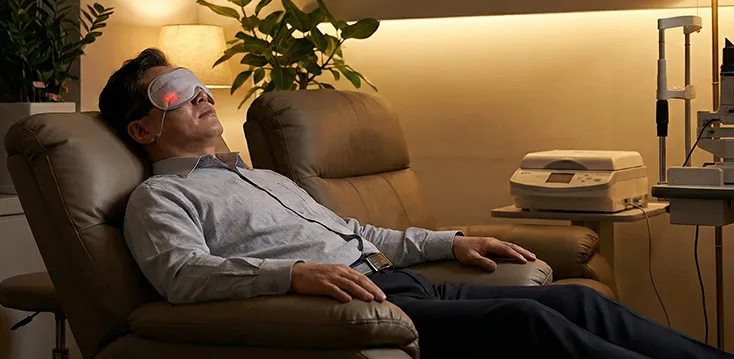
Applying a warm compress to the eyes helps improve the function of the meibomian glands.
Place a warm towel or a heated eye mask over your closed eyes for about 5–10 minutes, preferably in the morning and evening.
Gentle heat helps:
- Soften thickened oil inside the glands
- Improve oil secretion
- Enhance blood circulation around the eyelids
- Stabilize the tear film
※ Be careful not to use excessive heat, as it may cause skin irritation or burns.
Eyelid Cleaning
Keeping the eyelid margins clean is essential for maintaining healthy tear function.
Use a dedicated eyelid cleanser or cleansing wipe to gently clean along the lash line.
This helps:
- Remove debris, dust, and makeup residue
- Prevent blockage of the meibomian gland openings
- Promote smoother oil secretion
- Reduce the risk of inflammation
Consistent eyelid hygiene plays a key role in managing dry eye caused by MGD.
Blinking Exercises
Blinking is essential for spreading the tear film evenly across the eye surface.
However, when using smartphones or computers, the blinking rate can decrease to about one-third of normal, leading to faster tear evaporation.
To improve this:
- Make a conscious effort to blink regularly
- Fully close your eyes when blinking
- Take short breaks during prolonged screen use
Conscious blinking is one of the simplest yet most effective ways to maintain tear stability.
If your symptoms persist despite these care methods, there may be an underlying cause that cannot be resolved with artificial tears alone. In such cases, a detailed eye examination and appropriate treatment should be considered.
When Professional Dry Eye Treatment Is Needed
If your symptoms continue or worsen despite consistent use of artificial tears and daily care, your condition may not be simple dryness.
In many cases, this indicates chronic dry eye syndrome that requires medical treatment, rather than temporary fatigue.
Especially when the function of the tear film—particularly the oil layer (meibomian glands)—is impaired, self-care alone may not be enough to resolve the problem.
If you frequently experience the following symptoms, it is recommended to seek a detailed eye examination and consider professional treatment:
Your eyes become dry again quickly even after using artificial tears more than 5 times a day
You feel dryness, pain, or a gritty sensation when you wake up in the morning
You experience excessive tearing or sensitivity to wind (reflex tearing)
Your eyes are often red, and you notice sticky or stringy discharge
Dry eye symptoms worsened after LASIK, LASEK, or cataract surgery
Eye fatigue accumulates, leading to headaches or difficulty concentrating
These symptoms may indicate underlying conditions such as meibomian gland dysfunction (MGD) or tear film instability.
For long-term relief and stable eye health, identifying the exact cause through professional diagnosis is essential.
Why FDA-Approved Lumenis M22 IPL Is an Effective Dry Eye Treatment
For patients with dry eye caused by meibomian gland dysfunction (MGD), Intense Pulsed Light (IPL) therapy has become an effective treatment option.
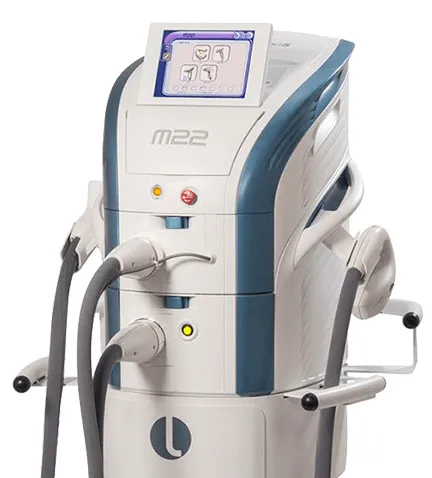
Among various IPL devices, Lumenis M22 IPL stands out due to its advanced technology and proven clinical safety.
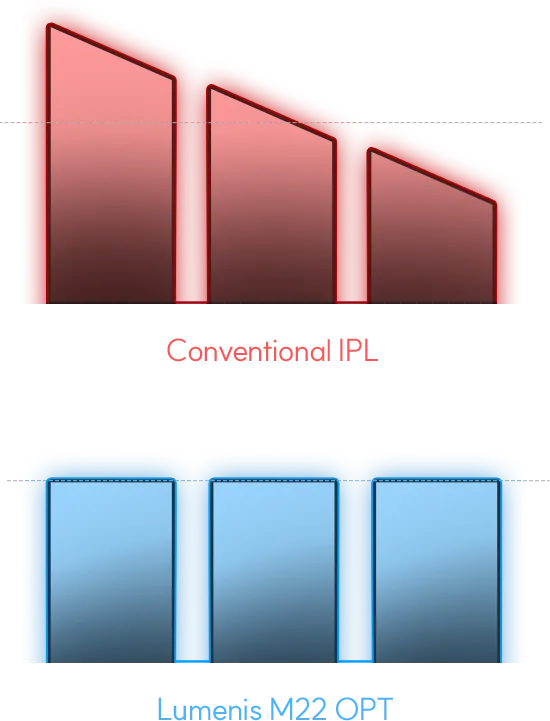
Unlike conventional IPL systems, the Lumenis M22 uses OPT (Optimal Pulse Technology) to deliver uniform and controlled energy, reducing discomfort during treatment while maximizing therapeutic effectiveness.
Typically, IPL treatment is recommended at intervals of 2–3 weeks for at least 3 sessions for optimal results.
This allows for safer treatment with:
Reduced risk of skin irritation,
More consistent energy delivery, Improved treatment outcomes
The Only FDA-Approved IPL Technology for Dry Eye Treatment
Lumenis M22 IPL
is a medical-grade device approved by the U.S. FDA specifically for dry eye treatment.
The device has been clinically evaluated for safety and effectiveness
It meets strict medical standards for treatment use
It is suitable for managing conditions like MGD-related dry eye
Compared to general cosmetic IPL devices, Lumenis M22 provides a more precise, controlled, and medically validated treatment approach.
Melting Effect
The heat generated by IPL helps melt thickened oil inside the meibomian glands.
When the oil becomes hardened or blocked, it cannot be properly secreted, leading to tear film instability.
IPL helps:
- Soften and liquefy the oil
- Improve gland function
- Restore a stable tear film
Anti-Inflammation Effect
Chronic dry eye is often associated with inflammation around the eyelids and glands.
IPL therapy helps reduce this inflammation, leading to:
- Less redness
- Reduced irritation
- Improved overall eye comfort
Anti-Bacterial Effect
IPL also helps control bacteria and Demodex mites, which are common contributors to chronic dry eye.
By reducing microbial activity around the eyelids, IPL can:
- Improve eyelid hygiene
- Reduce recurrence of symptoms
- Support long-term eye health
Lumenis M22 IPL effectively targets the three key causes of dry eye—oil blockage, inflammation, and bacteria—providing a comprehensive and effective treatment approach.
EYE Plus Dry Eye Care Program
The EYE Plus Dry Eye Care Program is a customized treatment system designed to accurately diagnose the underlying cause of dry eye and treat it step by step.
Rather than focusing on temporary symptom relief, this program aims to:
- Restore meibomian gland function
- Improve inflammation and tear film stability
- Provide long-term improvement of dry eye syndrome
Each treatment step is carefully structured to address the root cause of dry eye.
Step 1. Detailed Dry Eye Examination
A comprehensive evaluation is performed to assess:
Tear quantity and quality
Tear film stability
Meibomian gland condition
This step is essential to determine whether the symptoms are caused by simple dryness or meibomian gland dysfunction (MGD).
Based on these results, a personalized treatment plan is created for each patient.
Step 2. Warm Mask Treatment
A controlled warm mask is applied to the eyelids to gently heat the glands.
This helps:
Soften hardened oil inside the meibomian glands
Improve oil flow
Prepare the glands for the next treatment steps
It is an important pre-treatment stage that enhances the effectiveness of IPL and gland expression.
Step 3. M22 IPL Treatment
Using the FDA-approved Lumenis M22 IPL system, controlled light energy is applied to the eyelid area.
This treatment helps:
Reduce inflammation
Improve blood circulation
Restore meibomian gland function
It directly targets the core causes of dry eye and serves as a central treatment step in the program.
Step 4. Meibomian Gland Expression
After IPL treatment, a specialist gently applies pressure to the eyelids to express blocked oil from the glands.
This step:
Removes accumulated and hardened oil
Opens blocked gland ducts
Restores normal lipid secretion
As a result, the tear film becomes more stable and effective.
Step 5. LED Soothing Care
Finally, LED therapy is used to calm the treated area.
This helps:
Reduce irritation and redness
Support tissue recovery
Improve overall treatment comfort and satisfaction
It is the final step that promotes faster recovery and long-term stability.
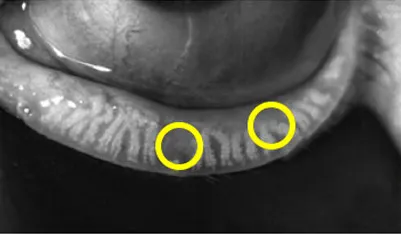
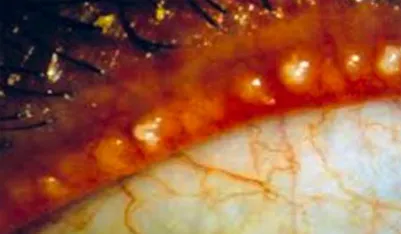
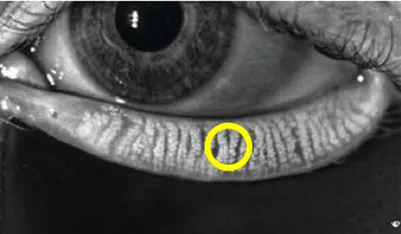
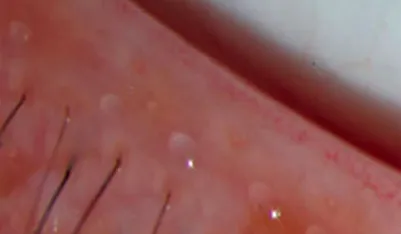
Before and After IPL Dry Eye Treatment
IPL dry eye treatment results show clear improvements in meibomian gland function and tear film quality.
Before treatment, glands may appear blocked, atrophied, or inflamed, with thick and stagnant oil secretion.
After IPL treatment, gland structure becomes more stable, and oil secretion appears clearer and more fluid.
These changes help improve tear stability, leading to reduced dryness, irritation, and overall symptoms of dry eye syndrome.
IPL Treatment Before
Atrophied or deteriorated meibomian glands
Inflamed, thickened, and hardened oil secretion
IPL Treatment After
Normal meibomian glands
Clear and clean oil secretion
* For a more accurate diagnosis, a detailed professional examination is recommended. Please use the button below to schedule a consultation or make a reservation at your convenience.
The most common cause of dry eye syndrome is meibomian gland dysfunction (MGD).
When the oil glands in the eyelids do not function properly, tears evaporate too quickly, leading to dryness, irritation, and unstable tear film.
Dry eye syndrome is often a chronic condition, but it can be effectively managed.
With proper treatment—such as IPL therapy, gland care, and lifestyle adjustments—symptoms can be significantly improved and kept under control long-term.
The best treatment depends on the underlying cause.
For MGD-related dry eye, treatments like IPL (Intense Pulsed Light), warm compress therapy, and meibomian gland expression are highly effective because they address the root cause rather than just relieving symptoms.
Most patients require at least 3 sessions, spaced about 2–3 weeks apart, to achieve noticeable improvement.
The exact number may vary depending on the severity of the condition.
IPL treatment is generally well tolerated.
You may feel a mild warm sensation or light snapping feeling on the skin, but discomfort is minimal, especially with advanced systems like Lumenis M22.
Yes. Most patients can resume normal daily activities immediately after treatment.
However, it is recommended to avoid excessive sun exposure and follow post-treatment care instructions.
In the early stages, artificial tears may still be used to support eye comfort.
However, as gland function improves, many patients find that they rely less on artificial tears over time.
Some patients notice improvement after the first session, but more stable results typically appear after completing the full treatment cycle.
Consistency in treatment and aftercare is key to long-term improvement.
Yes, dry eye syndrome can occur after laser vision correction due to temporary nerve changes and tear film instability.
However, treatments such as IPL and proper aftercare can help restore tear function and relieve symptoms.
Consultation Request
Please leave your questions for EYEPLUS,
and our staff will contact you after reviewing them.





 Warm Compress for the Eyes


If your symptoms persist despite these care methods, there may be an underlying cause that cannot be resolved with artificial tears alone. In such cases, a detailed eye examination and appropriate treatment should be considered.