EYEPLUS EYE CLINIC LASIK VS LASEKEYEPLUS EYE CLINIC LASIK VS LASEKEYEPLUS EYE CLINIC LASIK VS LASEKEYEPLUS EYE CLINIC LASIK VS LASEKEYEPLUS EYE CLINIC LASIK VS LASEK
A Safer Standard for Second Vision Correction
Built on 25 Years of Clinical Data
Vision changes can occur over time—even after LASIK, LASEK, SMILE, or lens implantation procedures.
In some cases, patients may consider vision correction enhancement (also known as LASIK eye surgery
enhancement, touch-up, or second surgery) to improve or refine their results.
However, reoperation eye surgery is fundamentally different from the first procedure.
Because the cornea has already been altered, a second surgery requires stricter safety standards, more
detailed analysis, and a highly selective approach.
At EYE Plus Eye Clinic, eligibility for LASIK second surgery or SMILE/LASEK enhancement is not
determined simply by patient preference.
Instead, it is carefully evaluated based on over 25 years of accumulated clinical data, including
corneal thickness, residual tissue stability, visual fluctuations, and long-term eye health.
In many cases, additional surgery may not be recommended.
Our priority is not to perform more procedures, but to determine whether enhancement is medically
appropriate and safe for each individual patient.
Through precise diagnostics and data-driven decision-making,
EYE Plus provides a safe and responsible standard for vision correction enhancement safe and
responsible standard for vision correction enhancement, focused on long-term stability rather than
short-term results.
Reasons Vision Can Change After Vision Correction Surgery
A decrease in vision after LASIK, LASEK, or SMILE does not always mean that enhancement surgery is
required.
The most important starting point is not the visual acuity number itself, but understanding why
vision has changed.
Before considering any form of LASIK enhancement or reoperation,
EYE Plus Eye Clinic carefully analyzes the underlying cause of vision change, including corneal
condition and visual quality.
Residual Astigmatism or Higher-Order Aberrations
In some cases, astigmatism may not have been fully corrected during the
initial procedure,
or higher-order aberrations may affect visual quality.
Patients may experience:
Glare or halos ,
Blurry or overlapping vision,
Reduced clarity, especially at night
These symptoms are often related to optical quality rather than simple
vision loss,
particularly when the laser treatment zone does not fully match the
patient’s pupil size.
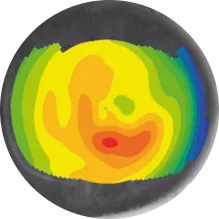
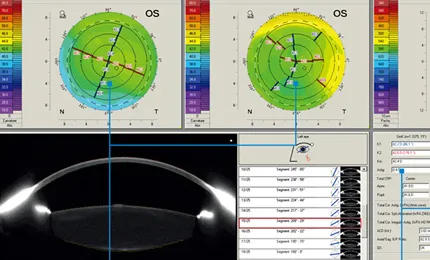
At EYE Plus, detailed corneal mapping and aberration analysis are
performed to determine
whether enhancement surgery is necessary or if conservative management
is more
appropriate.
Dry Eye Syndrome
A significant number of patients who consider LASIK second surgery
are actually experiencing dry eye–related visual fluctuation, not true regression.
When the corneal surface becomes dry or irregular:
Light scatters more easily,
Vision may appear blurry or unstable,
Symptoms may not match actual refractive measurements
In these cases, enhancement surgery is not the first solution.
Instead, treatment should focus on restoring tear film stability and improving the ocular
surface condition.
Myopic Regression (Actual Refractive Change)
Over time, some patients may experience a true refractive change,
where myopia gradually returns after the initial surgery.
This is more likely in:
Patients with high myopia before surgery,
Cases where long-term stability was not fully established
In such situations, EYE Plus evaluates:
Residual corneal thickness,
Corneal stability,
Long-term structural safety
Only after this analysis is completed, LASIK enhancement or second surgery is considered cautiously and
selectively.
Changes in Corneal Thickness and Structure
After the first surgery, the cornea may become thinner or undergo subtle structural changes
over time.
These changes can lead to:
Visual fluctuation,
Reduced stability,
Increased risk with additional laser correction
In particular, performing further surgery in these cases may increase the risk of corneal
ectasia or other complications.
For this reason, EYE Plus prioritizes safety by evaluating:
Residual corneal thickness,
Corneal strength,
Overall structural integrity
If safety criteria are not met, reoperation may not be recommended.
Age-Related Vision Change (Early Presbyopia)
For patients in their 40s and beyond,
changes in vision may be related to early presbyopia rather than
surgical outcomes.
Common symptoms include:
Difficulty focusing on near objects,
General visual discomfort despite acceptable distance vision
These changes are often misunderstood as a failure of the initial surgery.
However, in such cases, enhancement surgery may not be the most appropriate solution.
Instead, a presbyopia-focused approach should be considered to
address the patient’s
visual needs more effectively.
How We Determine Whether Enhancement Surgery Is Safe
At EYE Plus Eye Clinic, the principle for enhancement surgery is clear:
the question is not “Can we perform it?”, but “Is it safe to perform it?”
Because the cornea has already been altered during the first procedure,
LASIK enhancement or reoperation requires more conservative safety standards than primary vision
correction.
Enhancement surgery is only considered when all safety criteria are fully met.
If these standards are not satisfied, additional laser correction is not recommended.
Enhancement Surgery Safety Criteria (EYE Plus Standard)
Category
Safety Criteria for Enhancement Surgery
Residual Corneal Thickness
The predicted residual corneal thickness after surgery must be at least 400 μm or more
(excluding the epithelial layer).
Corneal Shape & Integrity
No signs of posterior corneal elevation or asymmetry (no suspicion of keratoconus).
Refractive Error Range
The remaining corneal tissue must be sufficient to maintain long-term structural stability
after additional correction.
Time Since Primary Surgery
At least 6 months to 1 year must have passed since the initial procedure.
Sufficient Residual Cornea Is Essential
Enhancement surgery is only possible when there is enough residual corneal tissue to ensure safety.
For patients who underwent surgery at EYE Plus,
previous surgical data is accurately preserved and used for evaluation.
For patients treated at other clinics,
we conduct a comprehensive diagnostic assessment to analyze:
Current corneal condition,
Structural stability,
Suitability for additional correction
Only after confirming all safety factors,
enhancement surgery is considered.
Best Timing for Enhancement Surgery
Enhancement surgery is not something that should be performed as early as possible.
It should only be considered after the eye has fully stabilized following the initial procedure.
After LASIK, LASEK, or SMILE, both vision and the cornea go through a period of healing and structural
remodeling.
Before this stabilization is complete, it is difficult to accurately determine whether enhancement is
truly necessary.
At EYE Plus Eye Clinic, we clearly distinguish between:
a period of observation, and,
the appropriate timing for surgery,
in order to avoid unnecessary reoperation.
Recommended Observation Period Before Enhancement
Initial Procedure
Minimum Observation Period
Reason
LASIK
At least 6 months
Time is required for corneal stability beneath the flap and stabilization of vision.
LASEK
At least 6–12 months
Longer time needed for epithelial healing and corneal remodeling.
SMILE
At least 6 months
Healing of the incision site and confirmation of refractive stability.
When Non-Surgical Treatment Should Be Considered First
Not all cases of decreased vision after surgery require enhancement.
In many cases, symptoms are caused by:
dry eye syndrome,
temporary corneal surface instability,
mild higher-order aberrations
In these situations, vision may feel blurry even without true refractive change.
Rather than proceeding directly to surgery,
non-surgical treatments such as eye drops, corneal surface management, and lifestyle adjustments
should be prioritized.
At EYE Plus, we take a conservative approach and avoid unnecessary reoperation when the root
cause can be treated without surgery.
When Observation Is Needed Before Considering Enhancement
Enhancement should not be performed while vision is still fluctuating.
If:
the stabilization period has not fully passed, or
test results show inconsistent changes
then continued observation is necessary.
Temporary vision fluctuation, worsening dry eye, or ongoing corneal remodeling may still be in
progress,
and making a decision at this stage may lead to inaccurate correction.
In these cases,
treatment and observation are carried out together, and the timing for reassessment is carefully
determined.
When Enhancement Surgery Should Be Performed Without Delay
Enhancement surgery may be recommended when:
the cause of vision decline is clearly identified, and
the eye meets all safety criteria
If residual refractive error, significant regression, or optical issues are confirmed,
performing enhancement at the appropriate time can help restore stable vision.
However, even in these cases, EYE Plus proceeds only when all conditions are satisfied,
including:
sufficient residual corneal thickness
structural stability
predictable correction range
Enhancement is carefully recommended, not routinely performed.
Special Considerations for Patients Over 40
For patients in their 40s and older, decreased vision after surgery may not be due to
regression,
but rather the onset of presbyopia (age-related near vision decline).
Even if distance vision is corrected again,
near vision may become more uncomfortable.
In some cases, mild myopia may actually help compensate for near vision,
and removing it completely can lead to earlier dependence on reading glasses.
For this reason,
EYE Plus evaluates not only vision measurements, but also:
lifestyle patterns
visual needs
progression of presbyopia
before recommending any additional surgery.
EYE Plus Expertise in Enhancement & Reoperation Surgery
Enhancement surgery cannot be performed in the same way as the initial procedure.
At EYE Plus Eye Clinic, reoperation is approached with stricter safety standards and more precise
criteria than the first surgery.
The goal is not to simply follow default machine values,
but to achieve meaningful and safe improvement through individualized fine-tuning based on each
patient’s eye condition.
Experienced Surgeon Supervision for Every Enhancement Procedure
Enhancement surgery involves greater variability and higher risk compared to
the first
procedure.
For this reason, at EYE Plus Eye Clinic,
all enhancement cases are directly evaluated and performed under the
supervision of a highly
experienced lead surgeon—from consultation to surgical planning and
execution.
This ensures:
accurate judgment of surgical eligibility
precise surgical planning
stable and safe outcomes
Data-Driven Surgical Planning Based on 25 Years of
Experience
Enhancement surgery requires more precise planning than the initial
correction.
Rather than relying solely on standard machine settings,
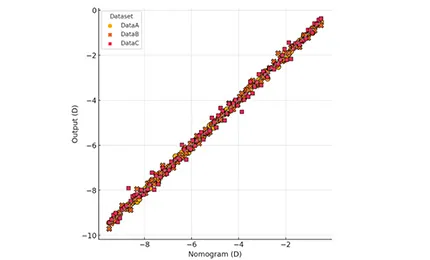
EYE Plus analyzes over 25 years of accumulated clinical data and surgical
experience to design
correction values.
By applying a proprietary nomogram that reflects:
individual corneal characteristics
patterns of vision change
long-term clinical outcomes
the clinic achieves more predictable and safer surgical results.
Personalized Fine-Tuning for Each Patient’s Eye Condition
Enhancement surgery is not a standardized procedure.
At EYE Plus Eye Clinic, surgical planning is customized based on:
residual corneal thickness
higher-order aberrations
pupil size (especially in low-light conditions)
individual lifestyle patterns
Rather than repeating the same type of correction,
the clinic focuses on proposing only changes that are both
safe and clinically meaningful.
Avoiding Unnecessary Reoperation and Offering Safer Alternatives
Enhancement surgery is not always the best solution.
If safety criteria are not fully met,
EYE Plus Eye Clinic does not recommend laser reoperation.
Instead, alternative approaches may be considered, including:
ICL (Implantable Collamer Lens)
phakic lens solutions or other vision correction options
non-surgical treatment or continued observation
The priority is always clear:
protecting the cornea and ensuring long-term eye health, rather than performing additional
surgery unnecessarily.
5-Step Safety Process for Enhancement Surgery
STEP 01. Detailed Eye Analysis
The first step is a comprehensive examination to accurately identify the cause of vision
change.
At EYE Plus Eye Clinic, the analysis includes:
visual acuity and refractive status,
corneal topography (shape),
corneal thickness,
higher-order aberrations,
dry eye condition
Rather than focusing only on numerical vision changes,
the clinic evaluates corneal structural stability and the underlying cause of reduced visual
quality.
In some cases, this analysis may determine that
reoperation is not necessary and that non-surgical management is sufficient.
STEP 02. Review by the Lead Surgeon
All examination results are carefully reviewed by the lead surgeon.
If the results are:
borderline, or,
show variability
an immediate decision is not made.
Instead, the clinic may recommend:
additional testing, or,
a period of observation
Enhancement surgery is not performed under uncertain conditions.
STEP 03. Explanation of Results and Consultation
Based on the examination results, patients receive a detailed explanation including:
whether enhancement surgery is possible,
expected level of vision improvement,
potential limitations and risk factors
If reoperation is not appropriate,
alternative treatment options or conservative approaches are also explained.
This step is designed to ensure that
the patient can fully understand the situation and make an informed decision.
STEP 04. Final Confirmation of Surgical Eligibility
Before surgery, the eye condition is checked once again.
In addition to the initial evaluation,
any changes in eye condition or overall health are reassessed.
Enhancement surgery is only performed when:
the results remain consistent, and,
all safety criteria are still satisfied
If even minor risk factors are identified,
the procedure may be postponed or canceled.
STEP 05. Surgery and Careful Postoperative Management
Enhancement surgery is performed under the supervision of an experienced lead surgeon.
After the procedure:
the eye condition is checked immediately,
recovery is monitored through scheduled follow-up visits
EYE Plus Eye Clinic places strong emphasis on
long-term stability, not just immediate results.
Postoperative care continues until vision is fully stabilized,
ensuring safe and reliable recovery.
FAQ About Intraocular Lens (IOL) Surgery
Yes, in some cases, enhancement surgery is possible even years after the initial procedure.
However, it depends on key factors such as residual corneal thickness, structural stability,
and overall eye condition.
At EYE Plus Eye Clinic, reoperation is not determined by time alone, but through a detailed
safety evaluation.
Blurred vision after surgery does not always mean that the procedure has “failed.”
Common causes include dry eye syndrome, temporary visual fluctuation, residual refractive
error or higher-order aberrations, and natural changes in the eye over time.
A precise examination is required to determine whether enhancement surgery is actually
necessary.
Enhancement surgery generally requires stricter safety criteria than the initial procedure,
because less corneal tissue remains after the first surgery.
When performed under proper evaluation and safety standards, it can be safe.
However, if conditions are not fully met, the risk of complications may increase.
For this reason, EYE Plus proceeds only when all safety criteria are clearly satisfied.
The timing depends on the type of initial procedure and how the eye heals.
In general: LASIK / SMILE: at least 6 months, LASEK: at least 6–12 months.
Enhancement should only be considered after the eye has fully stabilized,
not simply based on how quickly vision changes.
Not always.
For patients in their 40s or older, decreased vision may be due to presbyopia rather than
regression of the original correction.
In these cases, additional laser correction may not be the best solution,
and a presbyopia-focused strategy may be more appropriate.
Yes, depending on the cause.
If the issue is related to dry eye, corneal surface instability, or temporary healing
changes,
vision may improve with non-surgical treatment and proper management.
That is why identifying the exact cause is more important than proceeding directly to
surgery.
Yes, it is possible.
Even if the initial procedure was performed at another clinic,
EYE Plus conducts a comprehensive re-evaluation of corneal condition and surgical history
before considering enhancement.
If necessary data is not available,
a full diagnostic workup is performed to ensure safety before making any decision.
Consultation Request
Please leave your questions for EYEPLUS,
and our staff will contact you after reviewing them.