Can Vision Stay Stable After Surgery?
Corneal Cross-Linking for Safer, Long-Term Vision Correction
Clear vision immediately after LASIK or LASEK is important, but long-term corneal stability is what protects vision over time. Even when early surgical results are excellent, weakened corneal tissue may later lead to structural instability, vision regression, or progressive corneal disorders such as keratoconus.
Corneal Cross-Linking (also called corneal collagen cross-linking, or CXL) is designed to strengthen the cornea and improve its biomechanical stability. By reinforcing collagen bonds within the corneal tissue, this treatment helps reduce the risk of corneal weakening after vision correction surgery.
At EYE Plus Eye Clinic, corneal cross-linking is used as a protective strengthening procedure to support safer, more stable long-term vision correction. Rather than changing refractive power directly, CXL helps preserve the cornea’s shape and maintain stable visual outcomes for years after surgery.
What Is Corneal Cross-Linking (CXL)?
Corneal Cross-Linking is a treatment that strengthens weakened corneal tissue and helps stabilize the shape of the cornea. It is commonly used for conditions such as keratoconus, and it may also be recommended when there is concern about corneal weakening after LASIK or LASEK.
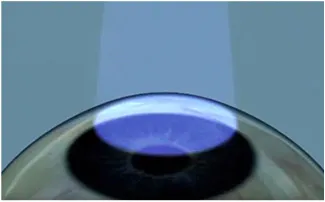
During the procedure, riboflavin (vitamin B2) eye drops are applied to the cornea, followed by controlled UV-A light exposure. This process increases collagen cross-links inside the corneal tissue, making the cornea stronger and more resistant to deformation.
Because CXL helps prevent progressive corneal weakening, it plays an important role in maintaining long-term vision stability and improving the safety of refractive surgery outcomes.
Xtra Corneal Cross-Linking Procedure
Xtra corneal cross-linking is designed as a safety-focused strengthening procedure that can be performed together with vision correction surgery. The treatment is efficient, precise, and does not require a long surgical time.
At EYE Plus Eye Clinic, the Xtra CXL process uses genuine riboflavin solution and carefully controlled UV-A irradiation based on corneal thickness and individual eye condition. This allows the corneal collagen fibers to bond more firmly, improving structural strength while maintaining procedural safety.
Step 1. Riboflavin (Vitamin B2) Application
The procedure begins with the application of riboflavin (vitamin B2) solution onto the cornea.
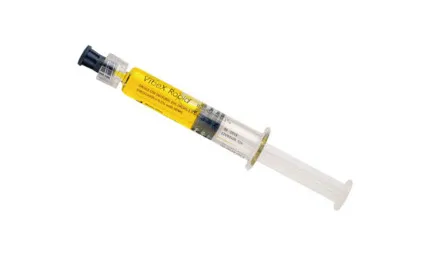
EYE Plus Eye Clinic uses genuine VibeX riboflavin, specifically designed for Avedro systems. This allows the riboflavin to penetrate quickly and evenly into the corneal tissue, helping ensure both safety and accuracy during the cross-linking reaction that follows.
Uniform riboflavin absorption is essential because it directly affects the precision and effectiveness of corneal collagen strengthening.
Step 2. Sterile Saline Rinsing
Once the riboflavin has been sufficiently absorbed into the corneal tissue, the corneal surface is gently rinsed with sterile saline solution.
This step removes any remaining excess riboflavin from the surface, keeps the surgical field clean, and helps prepare the cornea for accurate UV-A exposure in the next stage.
A clean corneal surface improves treatment precision and reduces unnecessary surface irritation.
Step 3. UVA Irradiation and Cross-Link Formation
In the final stage, precisely controlled UV-A light is applied using the Avedro KXL system.
The UV-A light activates the riboflavin inside the cornea, triggering the formation of new collagen cross-links between corneal fibers. These stronger collagen bonds reinforce the corneal structure and improve resistance against weakening or deformation.
EYE Plus Eye Clinic uses accelerated CXL technology, allowing the strengthening process to be completed in only a few minutes, compared with traditional methods that may require much longer treatment times.
Why Choose EYE Plus Xtra Corneal Cross-Linking?
EYE Plus Xtra Corneal Cross-Linking is designed not only to strengthen the cornea, but to reinforce it with greater precision and consistency across the entire treatment area.
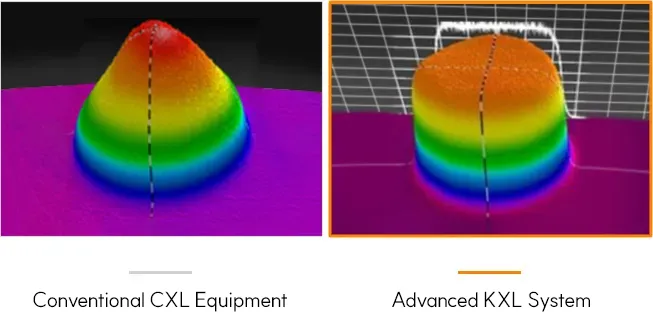
While older CXL systems may deliver UV energy unevenly, concentrating more heavily in the central cornea, the Avedro KXL system used at EYE Plus distributes energy more uniformly from the center to the peripheral cornea. This allows broader, more balanced corneal strengthening and improves long-term structural stability.
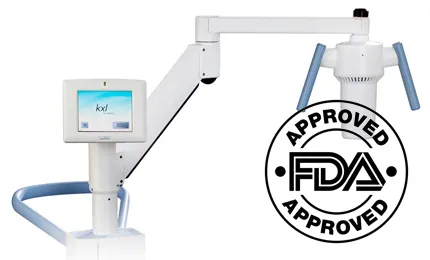
EYE Plus Eye Clinic combines advanced FDA-approved equipment with genuine riboflavin medication to provide safer, more reliable corneal collagen cross-linking treatment.
FDA-Approved Avedro KXL System
The Avedro KXL system is an internationally recognized corneal cross-linking platform used worldwide in clinical ophthalmology.
This original CXL device has received U.S. FDA approval and is widely trusted for its proven safety and effectiveness. It delivers precisely controlled UV-A energy across the cornea, helping create uniform collagen cross-links while minimizing uneven irradiation.
Because consistent UV energy delivery is essential for stable corneal strengthening, the use of certified original equipment improves treatment accuracy, long-term corneal stability, and overall patient safety.
Use of Genuine VibeX Riboflavin Only
The effectiveness of corneal cross-linking depends heavily on how evenly riboflavin penetrates into the corneal tissue before UV-A activation.
EYE Plus Eye Clinic uses only genuine VibeX riboflavin, specifically formulated for Avedro cross-linking systems. This original medication enables fast and uniform riboflavin absorption, supporting safe and efficient cross-link formation without requiring corneal epithelium removal in Xtra procedures.
To further improve safety, all medications and disposable application tips are used as sterile single-use materials, reducing infection risk and maintaining a clean treatment environment.
Strengthening Effect Proven by Clinical Data
The benefits of corneal cross-linking are supported not only by theory, but also by measurable clinical data. By reinforcing collagen bonds inside the cornea, CXL improves structural resistance and helps maintain long-term corneal stability after vision correction surgery.
At EYE Plus Eye Clinic, Xtra corneal cross-linking is used to strengthen weakened corneal tissue and reduce the risk of future corneal instability, especially in patients requiring greater long-term safety after LASIK or LASEK.
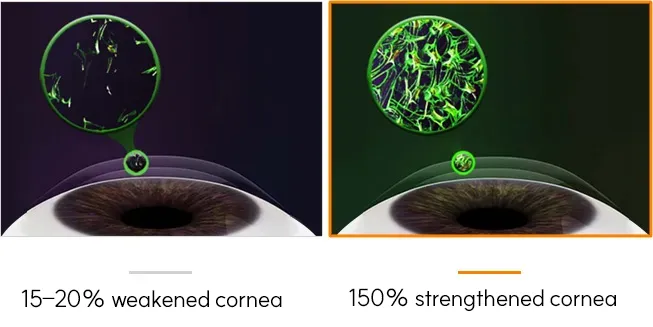
Up to 150% Increase in Corneal Strength
Clinical studies show that corneal collagen cross-linking can increase corneal collagen bonding strength by up to 150% compared with pre-treatment levels.
This means the cornea becomes significantly more resistant to external pressure and internal biomechanical stress. Stronger collagen bonding improves corneal elasticity and structural stability, reducing the long-term risk of corneal protrusion or progressive weakening.
In practical terms, this strengthening effect helps protect against corneal deformation and supports more stable vision after refractive surgery.
Safety Proven in Over 100,000 Cases
The safety of Xtra corneal cross-linking has been verified through more than 100,000 clinical cases worldwide.
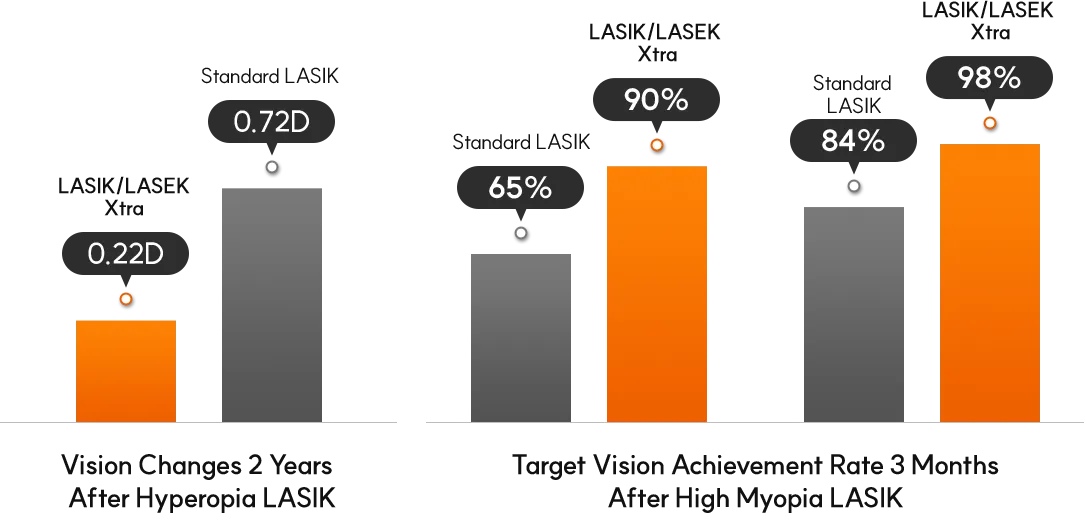
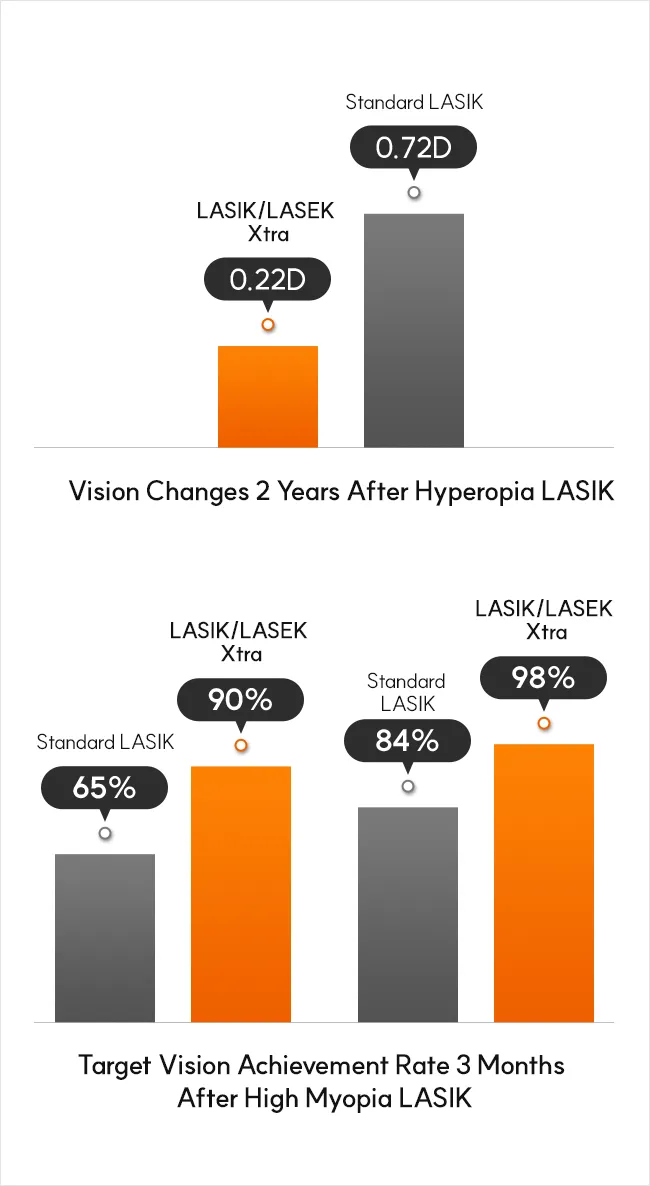
When combined with LASIK or LASEK, cross-linking has shown improved long-term vision stability compared with standard refractive surgery alone. Clinical outcome data indicate that patients receiving Xtra CXL experience lower regression rates and more stable refractive results over time.
Extra keratoconstriction can contribute to the recovery of target vision because the cornea becomes solid,
Safety has been proven with more than 100,000 operations worldwide.
👉 If you are curious about iPlus Eye Clinic’s safe All-laser LASIK,
Check out our precise examinations and systematic surgical process that considers corneal stability.
👉 If you are curious about iPlus Eye Clinic’s LASEK with the FROST COOLING system that minimizes pain,
Check out LASEK surgery that reduces recovery burden and improves visual stability.
Who Should Consider Corneal Cross-Linking?
Corneal Cross-Linking is especially recommended for patients who may be at higher risk of corneal weakening, instability, or long-term vision regression after refractive surgery. By strengthening the internal collagen structure of the cornea, CXL helps improve structural safety and maintain stable vision over time.
This treatment may be particularly beneficial for the following patients:
Patients with a family history of keratoconus
Corneal cross-linking can help stabilize the cornea early and reduce the risk of progressive keratoconus in patients with hereditary predisposition.
Patients concerned about myopic regression after LASIK or LASEK
When combined with vision correction surgery, CXL helps reinforce corneal stability and may reduce the likelihood of future regression.
High myopia patients requiring significant corneal tissue removal
In cases where more corneal tissue must be removed during surgery, strengthening the remaining cornea helps support long-term stability and visual safety.
Patients with thin corneas or naturally weak corneal structure
Structurally vulnerable corneas may benefit from added collagen reinforcement to reduce the risk of deformation over time.
Patients who have worn contact lenses for many years
Long-term contact lens wear may gradually weaken corneal biomechanics, making strengthening support beneficial in some cases.
Patients at risk of flap-related corneal instability after LASIK
In cases where flap creation may increase biomechanical weakness, cross-linking helps reinforce the cornea and reduce future structural complications.
* A detailed examination is required to determine suitability.
Corneal cross-linking is a treatment that strengthens the cornea by creating additional collagen bonds inside corneal tissue. It is used to improve corneal stability, slow or prevent progressive weakening such as keratoconus, and support long-term vision stability after LASIK or LASEK.
Yes. Corneal collagen cross-linking treatment is widely recognized as a safe and clinically proven procedure when performed with approved equipment and proper patient screening. At EYE Plus Eye Clinic, FDA-approved Avedro KXL systems and genuine VibeX riboflavin are used to ensure treatment precision and safety.
No. The purpose of CXL is not to make the cornea unnaturally rigid, but to restore and reinforce weakened collagen bonds. The treatment strengthens the cornea within a safe physiological range while preserving its natural function and flexibility.
Recovery is generally quick when Xtra CXL is performed together with LASIK or LASEK. Because it is integrated into the refractive surgery process, it usually does not significantly extend overall healing time. Most patients follow the same recovery timeline as their primary vision correction procedure.
Not significantly. Accelerated CXL technology allows the strengthening step to be completed within a few minutes, so the additional treatment time is minimal compared with traditional cross-linking methods.
The cost of corneal cross-linking varies depending on whether it is performed as a standalone keratoconus treatment or combined with LASIK/LASEK as Xtra CXL. Final pricing depends on eye condition, treatment plan, and whether additional corneal strengthening is medically recommended.
Yes. One of the main advantages of cross-linking after LASIK or LASEK is improved long-term corneal stability. By reinforcing corneal collagen structure, CXL may reduce the risk of regression and help maintain stable refractive outcomes over time.
No. Corneal cross-linking is recommended only for patients with specific risk factors, such as thin corneas, high myopia, family history of keratoconus, or increased concern about long-term corneal weakening. A detailed examination is needed to determine whether CXL is necessary.







Check out our precise examinations and systematic surgical process that considers corneal stability.